
The gather
A blowpipe takes a gather from the glory hole. The color of the glass at this hour is the same amber as the beer it will one day hold.
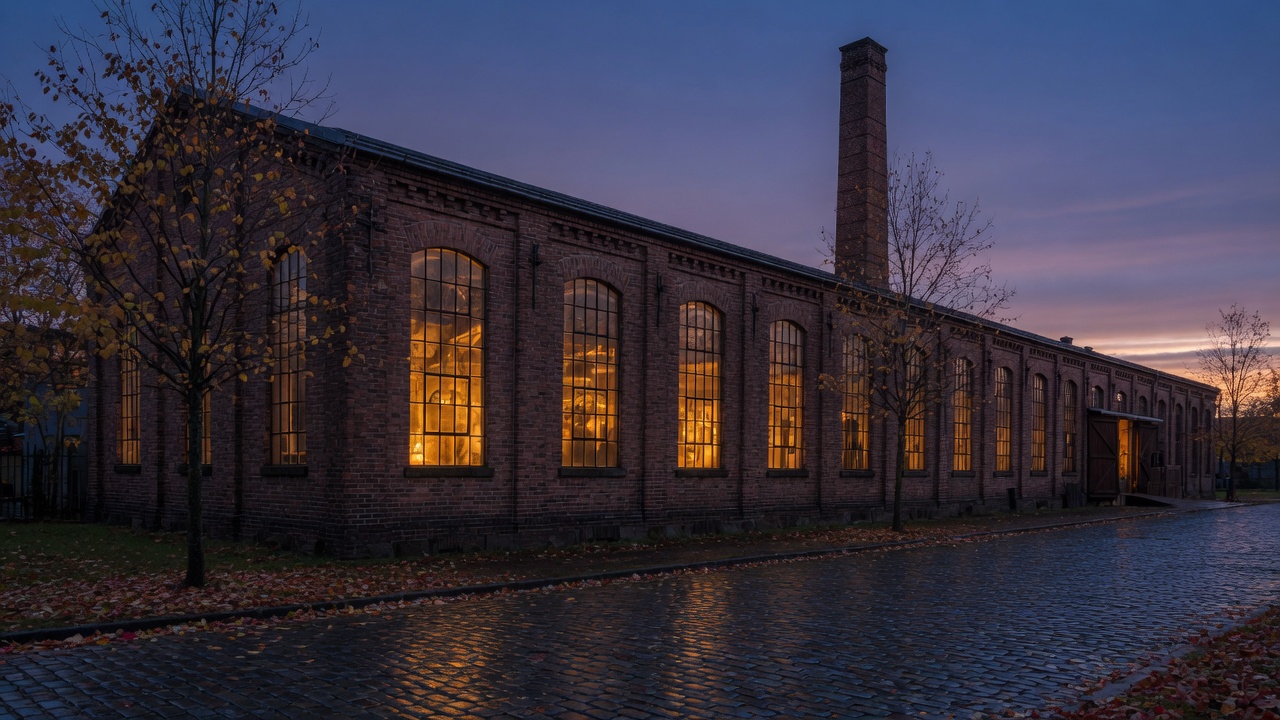
A long brick hall, a chimney, and a furnace that has not gone cold since the first Abbey drawing. Visitors from the trade are welcome by appointment.
In 1978 the works opened with a single mold and a stubborn idea: beer had borrowed enough from wine and from the tavern tumbler. The goblet — stemmed, bowl-shaped, heavy enough to slow the drinker down — deserved its own factory.
We still make that first drawing. The line grew only when a beer asked for it: a thinner chalice, a tulip that holds a head, a laser star for nucleation, a gold rim for the bottles that leave the cellar once a year.
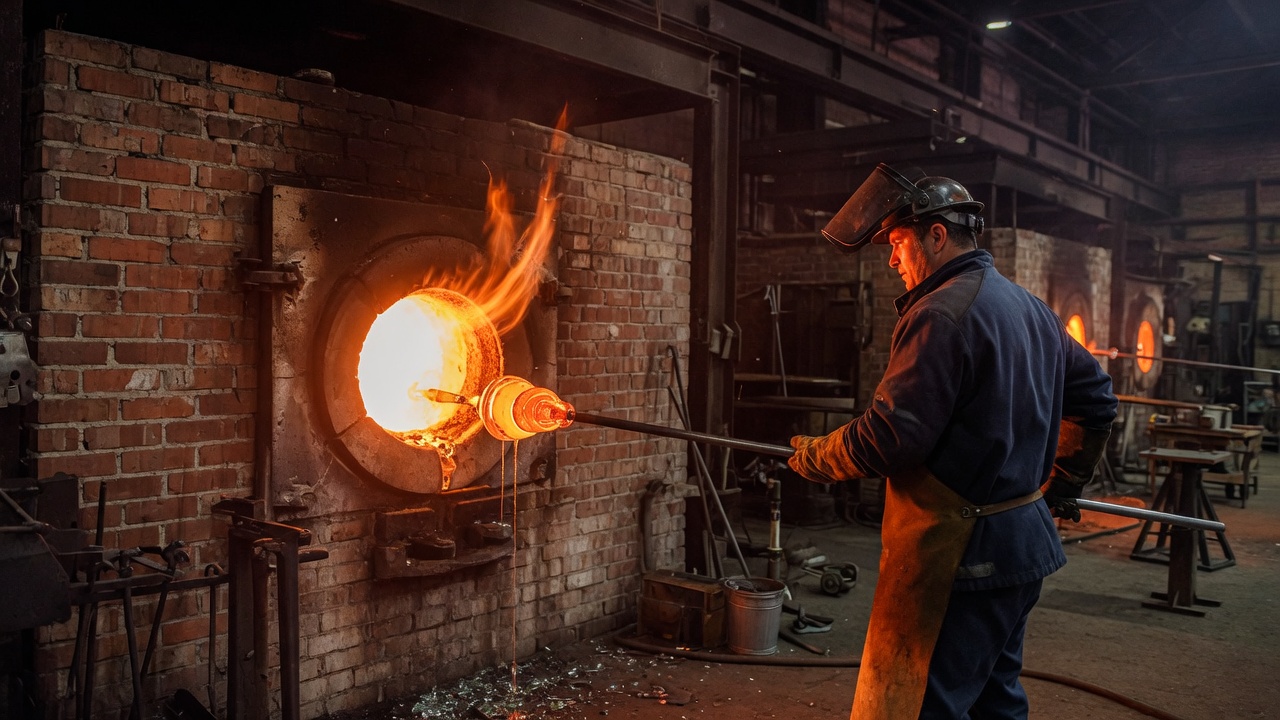
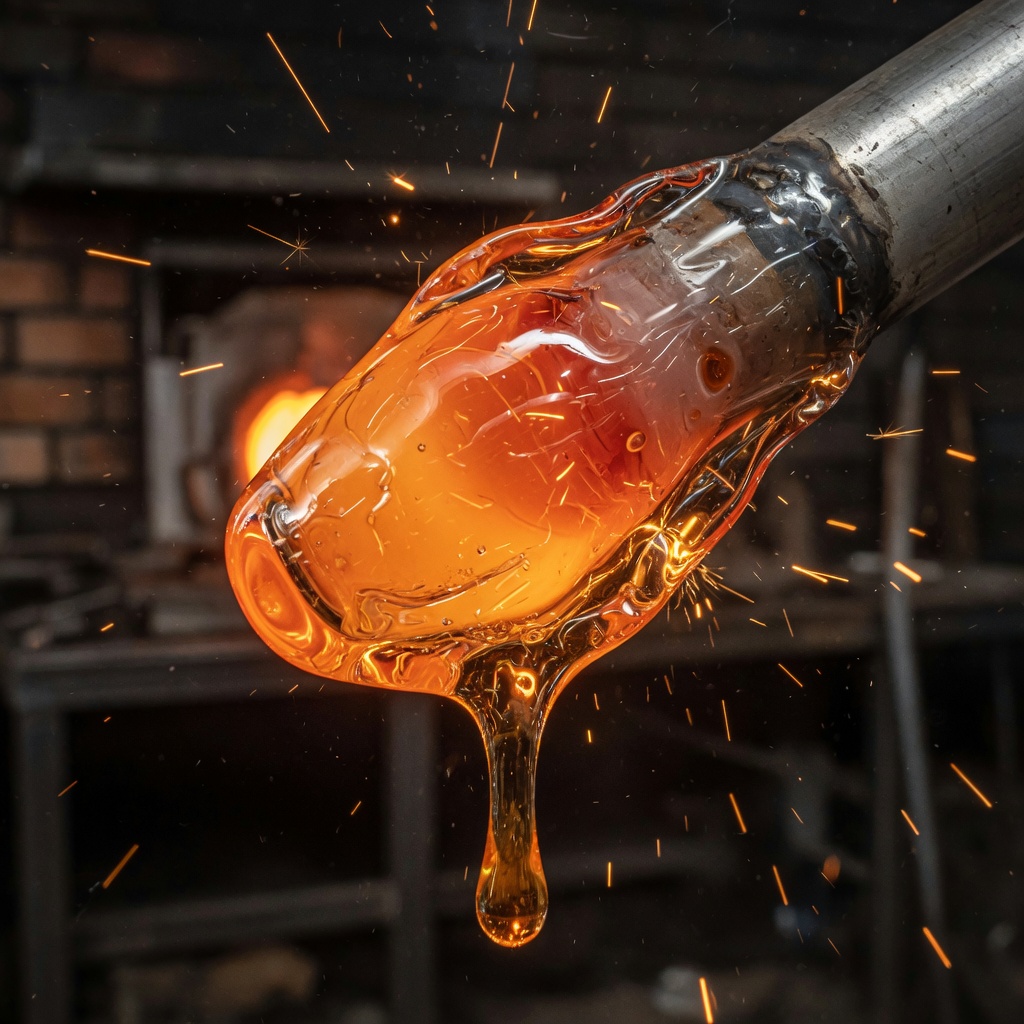
A blowpipe takes a gather from the glory hole. The color of the glass at this hour is the same amber as the beer it will one day hold.
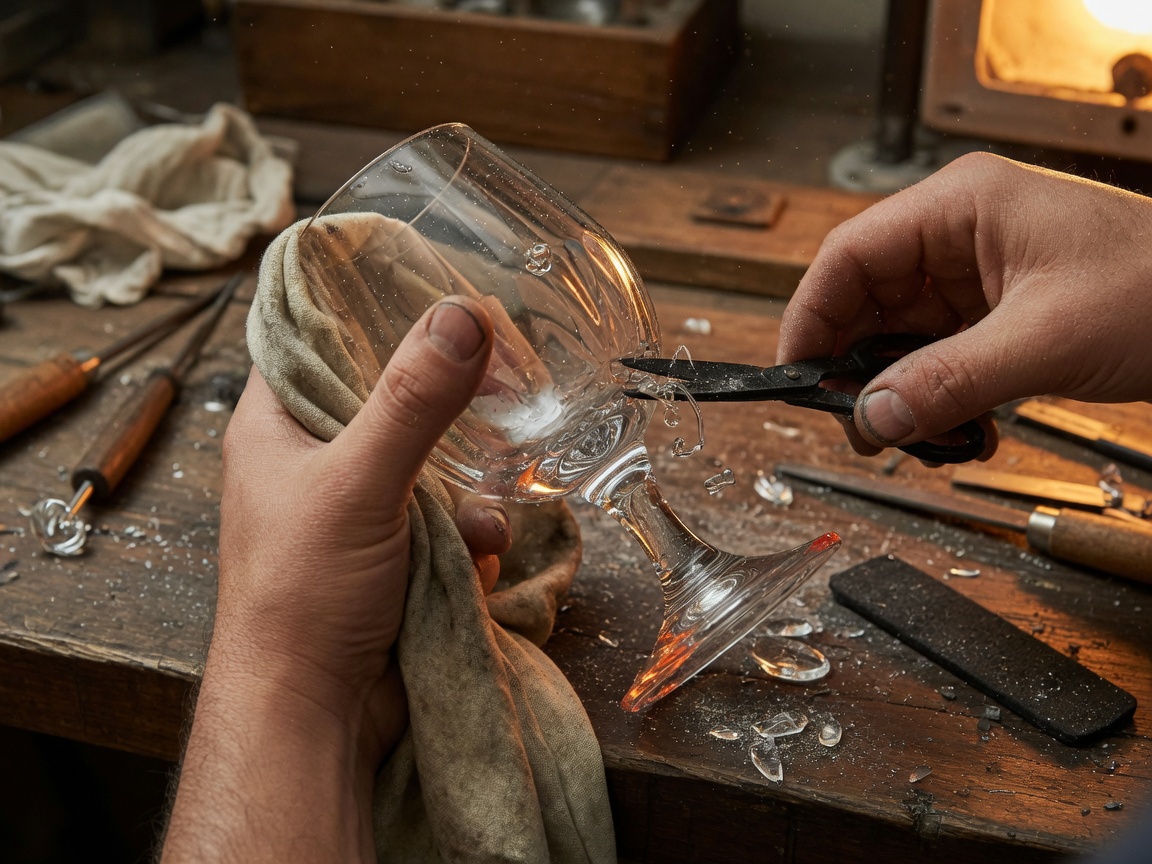
The Abbey and the Tulip are blown to a block, then opened. The Chalice is drawn thinner. Every mouth is fire-polished — no cut rim that catches the lip.
The knop is tooled by hand on the Abbey. The Chalice stem is drawn long and clean. The foot is trimmed while the glass can still take a correction.
Every piece anneals overnight. Unstressed crystal rings. Stressed crystal is cullet. We listen before we pack.
Nucleated glasses receive a laser constellation in the floor of the bowl. It is nearly invisible until the beer finds it, then it does not stop.
Abbey Gold is banded by hand with antique gold and a leaf tool. The star on the bowl is the same mark as the works emblem. Hand-wash only.
Brewers, buyers, and hoteliers can walk the floor, see a gather, and drink from the line in the tasting room off the packing hall. We do not run public tours. Write visits@beergoblet.com with a date.